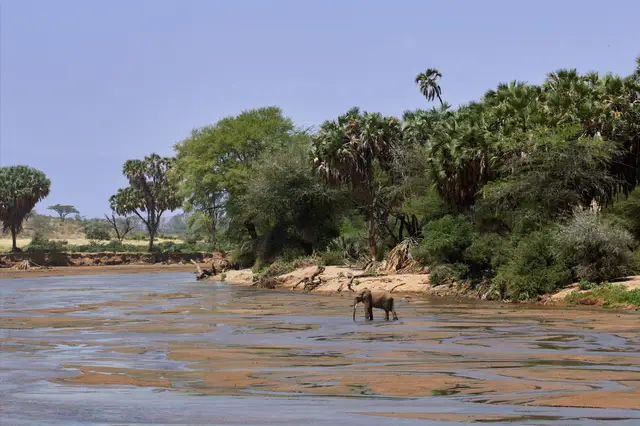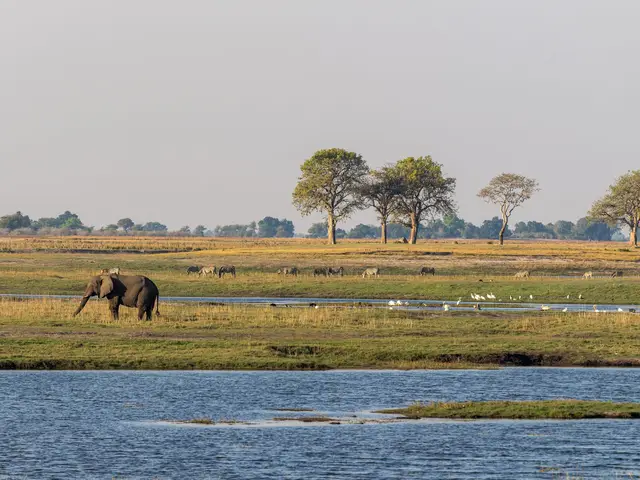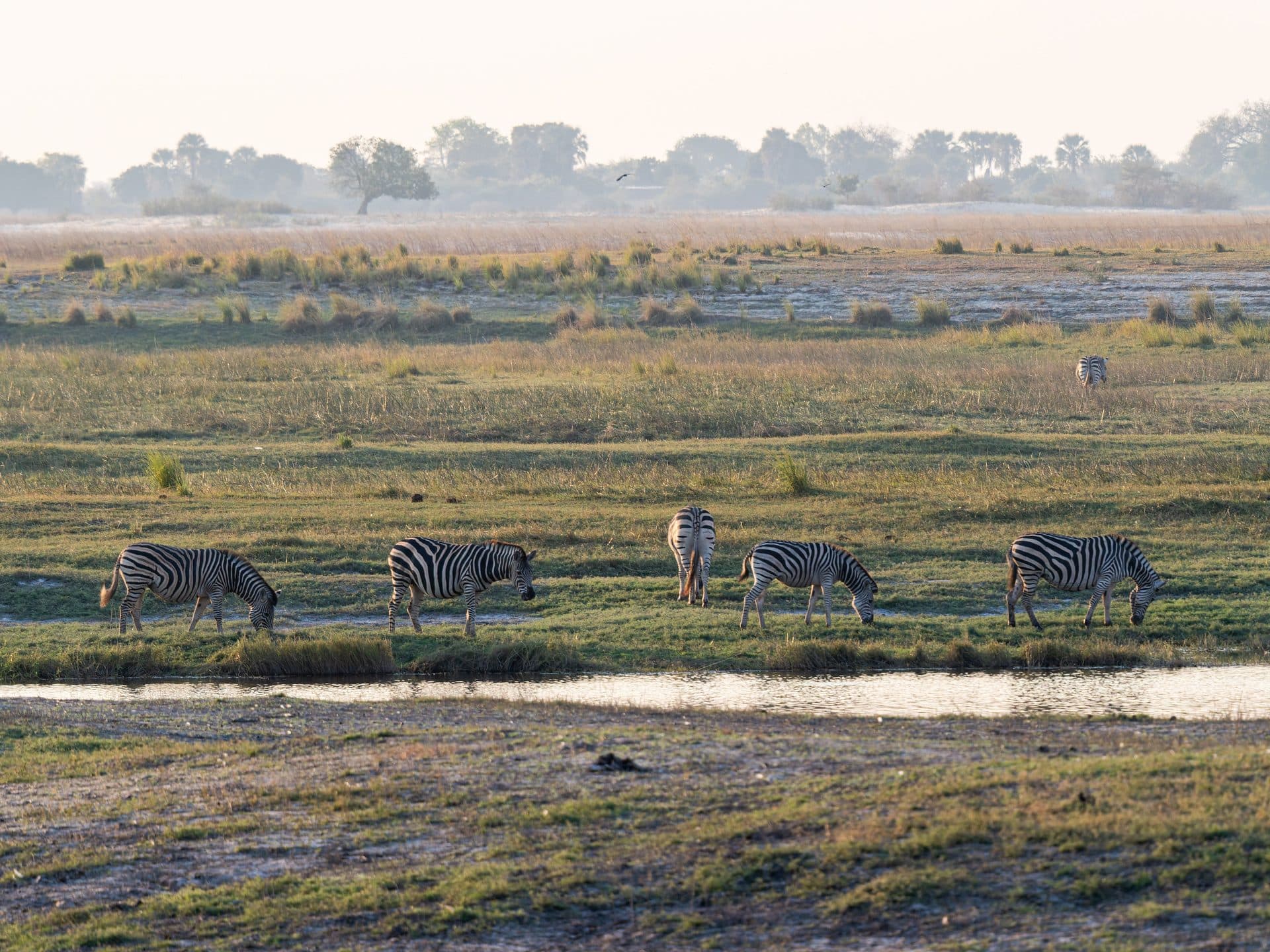
Botswana (Okavango Delta)
Botswana · Africa
The best time to visit Botswana (Okavango Delta) is March, April, May, June, July, August, September, October, and November. In summer, daytime highs average 36°C (97°F), with peaks around 39°C (102°F); in winter, nights average 9°C (48°F), dropping to around 3°C (37°F) on the coldest. During the best travel months, the sun shines up to 9 hours per day — ideal for sightseeing and outdoor activities.
Botswana (Okavango Delta) – What you should know
The Okavango Delta in northern Botswana is an inland delta: the Okavango River disappears into the sands of the Kalahari and spreads out as a network of lagoons and islands. What matters for a visit is therefore not only the local rain but also the flood. The water comes from rainfall in Angola and reaches the delta months later, in the middle of the local dry season. The high water thus falls roughly in the months June to August, when hardly any rain is left locally.
The dry season from May to October is the classic safari time. Hardly any rain falls, and humidity drops to around 30% in September and October, so animals gather at waterholes and channels. From June to August the days are pleasant, with daytime highs averaging around 26–30°C (79–86°F), but the nights are cool: in July the coldest nights are around 3°C (37°F), and warm jackets are needed on morning game drives in open vehicles.
From September it gets hot: in October daytime highs average 36°C (97°F), around 39°C (102°F) on the hottest days, and the rains set in during November. From December to February more than 100 mm (3.9 in) a month falls on average, in January around 170 mm (6.7 in) on 14 rain days. This green season has its appeal, with young animals, migratory birds and lower prices, but tracks are often harder to drive. Unlike on the Chobe River, it is the water of the delta, with mokoro trips and walks, that shapes the safari here.
Climate Overview
| Jan | Feb | Mar | Apr | May | Jun | Jul | Aug | Sep | Oct | Nov | Dec | |
|---|---|---|---|---|---|---|---|---|---|---|---|---|
Ø day, range from coolest to warmest dayØ dayrange | 32° (90°)26– (79–)37 (99) | 33° (91°)26– (79–)36 (97) | 32° (90°)25– (77–)36 (97) | 31° (88°)24– (75–)34 (93) | 29° (84°)25– (77–)32 (90) | 27° (81°)21– (70–)30 (86) | 26° (79°)21– (70–)30 (86) | 30° (86°)23– (73–)34 (93) | 34° (93°)26– (79–)38 (100) | 36° (97°)29– (84–)39 (102) | 35° (95°)26– (79–)39 (102) | 33° (91°)26– (79–)38 (100) |
Ø night, range from coldest to warmest nightØ nightrange | 21° (70°)17– (63–)23 (73) | 21° (70°)18– (64–)23 (73) | 20° (68°)16– (61–)22 (72) | 17° (63°)11– (52–)20 (68) | 13° (55°)7– (45–)18 (64) | 10° (50°)3– (37–)15 (59) | 9° (48°)3– (37–)14 (57) | 12° (54°)5– (41–)17 (63) | 17° (63°)10– (50–)23 (73) | 21° (70°)15– (59–)25 (77) | 22° (72°)17– (63–)25 (77) | 21° (70°)18– (64–)24 (75) |
☀️Sunshine | 8h UV 9 | 8h UV 9 | 9h UV 9 | 9h UV 8 | 10h UV 8 | 10h UV 7 | 10h UV 7 | 11h UV 8 | 11h UV 10 | 11h UV 10 | 10h UV 10 | 9h UV 9 |
🌧Rain Days | 14d169mm (6.6") | 11d107mm (4.2") | 8d80mm (3.2") | 3d25mm (1.0") | 0d1mm (<0.1") | 0d0mm (<0.1") | 0d1mm (<0.1") | 0d0mm (<0.1") | 0d1mm (<0.1") | 0d4mm (0.1") | 5d42mm (1.7") | 13d113mm (4.4") |
Best travel timeØ = average · small figures = range: coolest–warmest day / coldest–warmest nightClimate data 2005–2025 · Source: ERA5 + station data
Travel Tips
In October and November, temperatures can exceed 34°C (93°F) — during physical activity or with children, it's best to stick to morning and evening hours.
From January to December, UV levels in Botswana (Okavango Delta) reach 10 — very high on the WHO scale. High-SPF sunscreen and shade around midday are essential.
February offers great weather in Botswana (Okavango Delta) with fewer tourists and lower prices — ideal for those who want to avoid the peak season crowds.
The travel year in Botswana (Okavango Delta)
December – March
The green season: thunderstorms roll across the delta, the land turns lush and migratory birds fill the sky. Many animals give birth now, and camps are cheaper and nearly empty. The flip side is muggy air, softened tracks and some lodges closing or offering a reduced programme.
April – June
The rains end, the air turns clear and dry and the landscape is still green. The flood from Angola reaches the delta and lifts the channels, and by June the nights are already cool. Lodges reopen fully and the safari season gathers pace.
July – September
Peak safari season: the water stands highest, islands and channels form a maze and mokoro trips are at their best. Mornings in the open vehicle call for blankets, and by midday it warms up. Animals gather at the waterholes and camps are well booked, so reserve early.
October – November
The heat is at its fiercest, the land parched and everything crowds around the last waterholes, which makes it almost the best time for game viewing. Middays are oppressive, and days start and end early. In November towering clouds announce the first rains and the bush begins to green.
Events & Festivals
July
- Peak of the Okavango flood· June to August (usually cresting in July)
Floodwater from the rains in Angola reaches the delta from April and is at its greatest extent around July, in the middle of the local dry season. Channels and lagoons are then at their fullest and mokoro trips at their best; the exact timing varies from year to year.
Frequently Asked Questions
- When is the best time to visit Botswana (Okavango Delta)?
- The best time to visit Botswana (Okavango Delta) is March, April, May, June, July, August, September, October, and November. These months offer the most favourable combination of sunshine, temperatures, and low rainfall.
- How warm does it get in Botswana (Okavango Delta)?
- In summer, daytime highs in Botswana (Okavango Delta) average 36°C (97°F), with peaks around 39°C (102°F); in winter, nights average 9°C (48°F), dropping to around 3°C (37°F) on the coldest.
- How much rain does Botswana (Okavango Delta) get?
- Botswana (Okavango Delta) has a relatively even rainfall pattern with an average of 5 rain days per month. The driest months are June, August, and September.
Best Travel Time by Vacation Type
🏙️
City Trip
Pleasantly mild, not too hot
MayJunAug