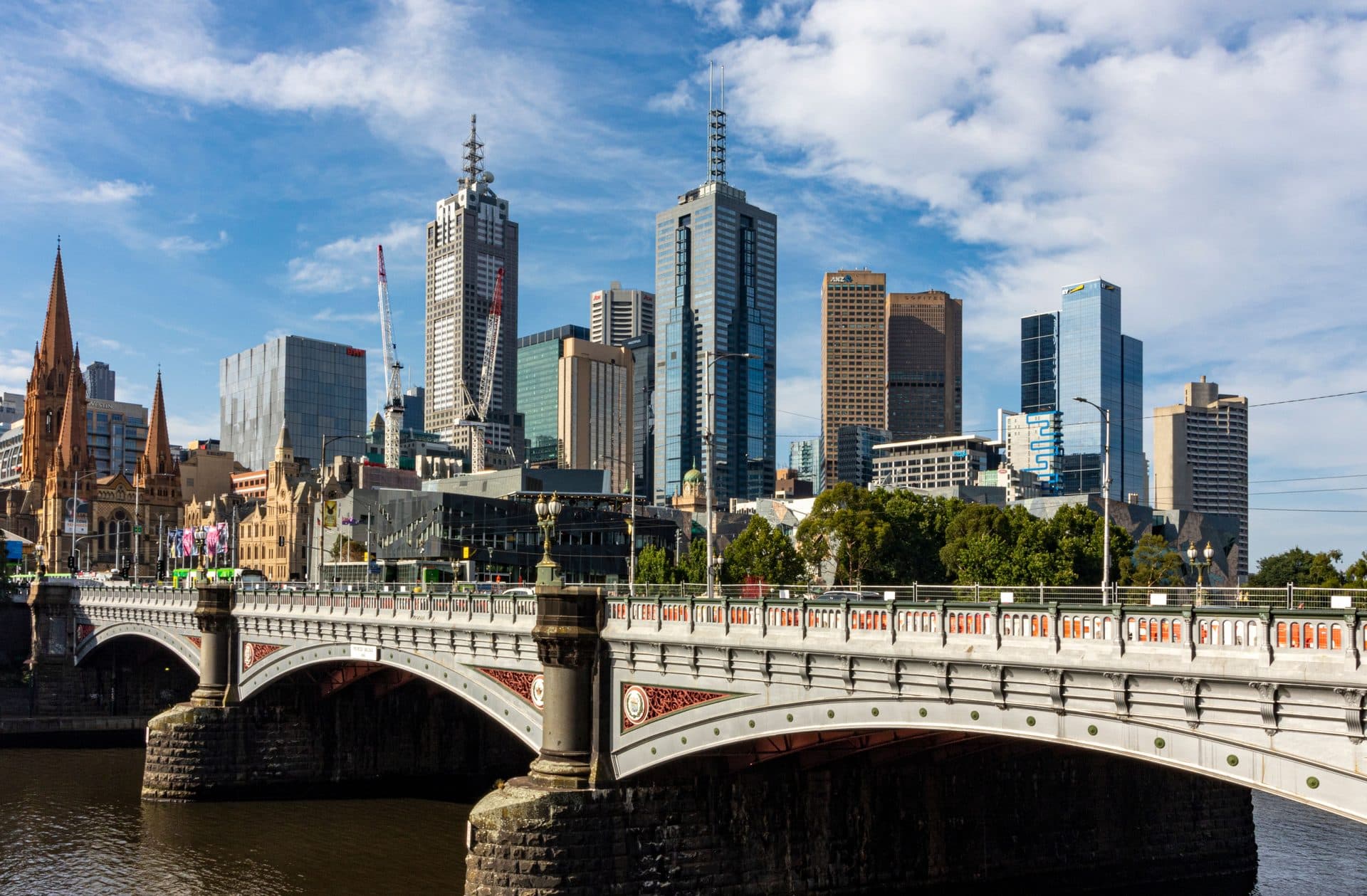
Australia (Melbourne)
Australia · Oceania
The best time to visit Australia (Melbourne) is January, February, March, and December. In summer, daytime highs average 27°C (81°F), with peaks around 40°C (104°F); in winter, nights average 7°C (45°F), dropping to around 0°C (32°F) on the coldest. During the best travel months, the sun shines up to 9 hours per day — ideal for beach and outdoor activities.
Australia (Melbourne) – What you should know
Melbourne has a temperate climate with four seasons and a reputation for rapid weather changes: a hot day can end with a cool southerly front in the evening. The summer months December to February bring daytime highs averaging around 25–27°C (77–81°F) and about 8 hours of sunshine a day, but on the hottest days also around 37–40°C (99–104°F). The weather swings more than in most European cities.
Rain is spread across the whole year, between 30 and 55 mm (1.2 and 2.2 in) a month on three to six rain days. What matters is therefore less the amount of rain than sun and warmth: from June to August daytime highs average around 14°C (57°F) with only about three to four and a half hours of sunshine, and the coldest nights get close to 0°C (32°F). As a city trip with cafés, art and sport, Melbourne still works all year.
For trips with excursions such as the Great Ocean Road, January to March is best, although February can be the month of heat peaks and bushfire risk rises in the hinterland. March still averages 24°C (75°F) but brings shorter nights and less heat. Autumn in April and the months September to November are mild to fresh; in November daytime highs typically reach 22°C (72°F). The Australian Open takes place in January, when accommodation is scarce.
Climate Overview
| Jan | Feb | Mar | Apr | May | Jun | Jul | Aug | Sep | Oct | Nov | Dec | |
|---|---|---|---|---|---|---|---|---|---|---|---|---|
Ø day, range from coolest to warmest dayØ dayrange | 27° (81°)18– (64–)40 (104) | 26° (79°)18– (64–)37 (99) | 24° (75°)16– (61–)35 (95) | 21° (70°)14– (57–)28 (82) | 17° (63°)12– (54–)22 (72) | 14° (57°)10– (50–)18 (64) | 14° (57°)10– (50–)17 (63) | 15° (59°)10– (50–)20 (68) | 18° (64°)12– (54–)26 (79) | 20° (68°)13– (55–)30 (86) | 23° (73°)14– (57–)35 (95) | 25° (77°)16– (61–)38 (100) |
Ø night, range from coldest to warmest nightØ nightrange | 16° (61°)9– (48–)22 (72) | 15° (59°)9– (48–)20 (68) | 14° (57°)8– (46–)20 (68) | 11° (52°)5– (41–)17 (63) | 9° (48°)3– (37–)15 (59) | 7° (45°)1– (34–)12 (54) | 7° (45°)0– (32–)11 (52) | 8° (46°)1– (34–)12 (54) | 9° (48°)2– (36–)15 (59) | 10° (50°)4– (39–)16 (61) | 12° (54°)6– (43–)19 (66) | 14° (57°)8– (46–)19 (66) |
☀️Sunshine | 9h UV 8 | 8h UV 8 | 7h UV 7 | 5h UV 5 | 4h UV 4 | 4h UV 3 | 4h UV 3 | 5h UV 4 | 5h UV 6 | 7h UV 7 | 7h UV 7 | 9h UV 8 |
🌊Water Temp | 21° (70°) | 22° (72°) | 20° (68°) | 18° (64°) | 15° (59°) | 13° (55°) | 12° (54°) | 12° (54°) | 13° (55°) | 15° (59°) | 18° (64°) | 20° (68°) |
🌧Rain Days | 4d42mm (1.7") | 3d39mm (1.5") | 3d33mm (1.3") | 5d50mm (2.0") | 5d40mm (1.6") | 5d37mm (1.5") | 6d40mm (1.6") | 6d41mm (1.6") | 6d43mm (1.7") | 5d45mm (1.8") | 6d57mm (2.3") | 5d49mm (1.9") |
Best travel timeØ = average · small figures = range: coolest–warmest day / coldest–warmest nightClimate data 2005–2025 · Source: ERA5 + station data
Travel Tips
In February, UV levels in Australia (Melbourne) reach 8 — very high on the WHO scale. High-SPF sunscreen and shade around midday are essential.
November offers great weather in Australia (Melbourne) with fewer tourists and lower prices — ideal for those who want to avoid the peak season crowds.
The travel year in Australia (Melbourne)
December – February
High summer with a packed sports calendar: in January everything revolves around the Australian Open, and in the evenings rooftop bars and open-air cinemas fill up. The heat comes in bursts, and a cool southerly front often ends a day well above 30°C (86°F) within hours. Anyone heading for the Great Ocean Road starts early.
March – May
Autumn is Melbourne's quiet best: leaves in the parks, March evenings that are still warm and café terraces with blankets. From April the hours of sunshine drop sharply, May turns noticeably fresh, and the city retreats into pubs, galleries and cinemas.
June – August
Winter means coat, scarf and footy: at weekends the Australian-rules stadium is the real meeting point of the city. Days are short and often grey, and at night the temperature nears freezing. In return, coffee culture, art and festivals are hard to beat in these months.
September – November
Spring is moody: sun, showers and wind alternate by the hour, and four seasons in one day is no cliché here. Gardens bloom, November turns festive around Melbourne Cup weekend, and the beach season edges closer.
Events & Festivals
January
- Australian Open· mid-January to early February
The year's first Grand Slam tennis tournament is played at Melbourne Park on the edge of the city centre. For around three weeks the precinct is the city's meeting point for matches and entertainment, and hotels are busy throughout.
March
- Formula 1 Australian Grand Prix· varies (usually March)
The Formula 1 race is held on a street circuit around the lake in Albert Park, a few kilometres south of the city centre. Melbourne hotels book out early for race weekend.
- Moomba Festival· Labour Day weekend (up to the second Monday in March)
Australia's largest free community festival takes place along the Yarra around Birrarung Marr and Alexandra Gardens. Highlights are the Birdman Rally, where entrants leap into the river in home-made flying machines, and the Moomba Parade on the Monday.
November
- Melbourne Cup· first Tuesday in November
Australia's most famous horse race is run at Flemington Racecourse with a 3 pm start. Cup Day is a public holiday in metropolitan Melbourne, and well beyond the track much of the country pauses for the race.
Frequently Asked Questions
- When is the best time to visit Australia (Melbourne)?
- The best time to visit Australia (Melbourne) is January, February, March, and December. These months offer the most favourable combination of sunshine, temperatures, and low rainfall.
- How warm does it get in Australia (Melbourne)?
- In summer, daytime highs in Australia (Melbourne) average 27°C (81°F), with peaks around 40°C (104°F); in winter, nights average 7°C (45°F), dropping to around 0°C (32°F) on the coldest.
- How much rain does Australia (Melbourne) get?
- Australia (Melbourne) has a relatively even rainfall pattern with an average of 5 rain days per month. The driest months are February, March, and June.
- How warm is the water in Australia (Melbourne)?
- Water temperature in Australia (Melbourne) ranges from 12°C (54°F) (July) to 22°C (72°F) (February). During the best travel months (January, February, March, and December), the water is most pleasant for swimming.
Best Travel Time by Vacation Type
🏖️
Beach Holiday
Warm, sunny, little rain
JanFebDec
🏙️
City Trip
Pleasantly mild, not too hot
JanFebMar