Curaçao
Curaçao · North America
The best time to visit Curaçao is January, February, March, April, May, June, July, August, September, October, and December. In summer, daytime highs average 33°C (91°F), with peaks around 35°C (95°F); in winter, nights average 25°C (77°F), dropping to around 22°C (72°F) on the coldest. During the best travel months, the sun shines up to 9 hours per day — ideal for beach and outdoor activities.
Curaçao – What you should know
Curaçao lies off the coast of Venezuela and therefore south of the classic hurricane belt — which sets the island apart from almost every other Caribbean destination. The climate is semi-arid, with trade winds and little rain: from February to July only 15–35 mm (0.6–1.4 in) falls a month, on one to four days. Daytime highs stay between 29 and 32°C (84 and 90°F) all year, and the sun shines 8 to 9.5 hours a day on average.
The rainy season falls between October and December: November is the wettest month with just over 140 mm (5.5 in) and nine rain days, followed by October with about 105 mm (4.1 in). The showers are mostly brief, and the water stays comfortable at 27–29°C (81–84°F) anyway. For visitors this means there is hardly a true low season, and even in summer the steady wind makes highs of 32–33°C (90–91°F) more bearable — but with UV values around 9, sun protection should be consistent.
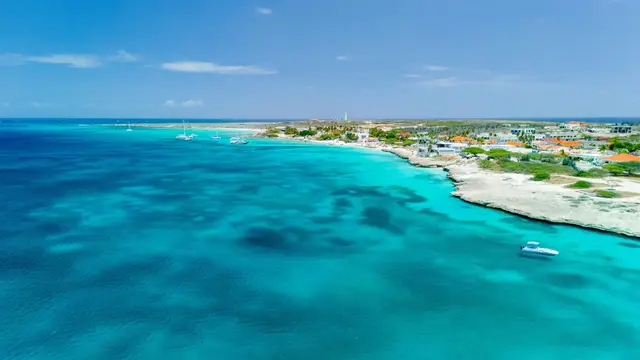
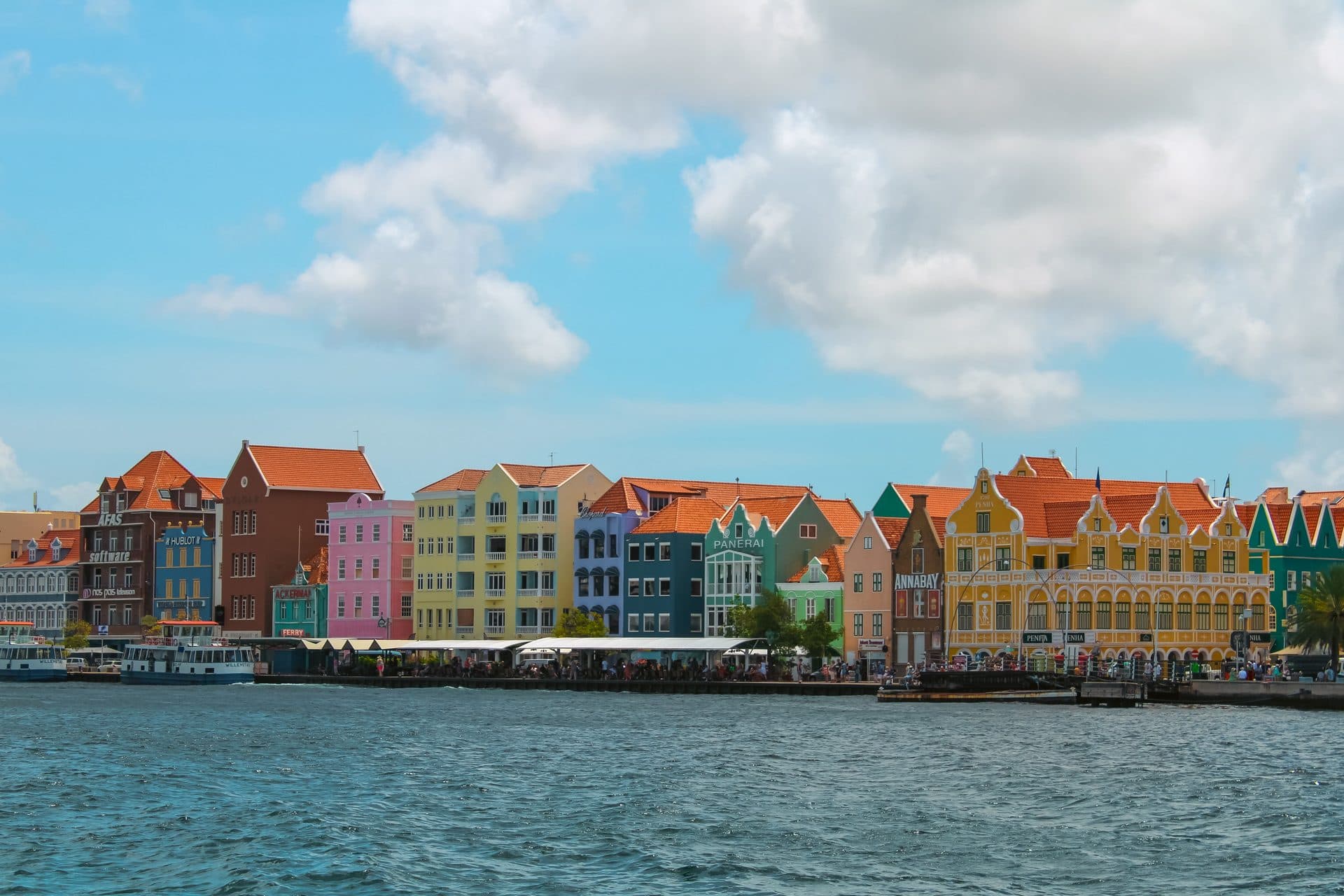
Curaçao is not a jungle island but a sparse, tidy cactus landscape with dozens of small coves, many with a reef right off the beach — diving and snorkelling work all year. Willemstad, with its colourful Dutch gabled houses, is a UNESCO World Heritage Site, and the trip to Klein Curaçao, an uninhabited neighbouring island, is a day-out classic. Unlike the green islands of the Lesser Antilles such as Martinique or Guadeloupe, there is little rainforest hiking here, but the weather is more reliable.
Climate Overview
| Jan | Feb | Mar | Apr | May | Jun | Jul | Aug | Sep | Oct | Nov | Dec | |
|---|---|---|---|---|---|---|---|---|---|---|---|---|
Ø day, range from coolest to warmest dayØ dayrange | 30° (86°)27– (81–)31 (88) | 30° (86°)28– (82–)31 (88) | 31° (88°)28– (82–)31 (88) | 31° (88°)29– (84–)32 (90) | 32° (90°)29– (84–)33 (91) | 32° (90°)30– (86–)33 (91) | 32° (90°)30– (86–)33 (91) | 33° (91°)30– (86–)34 (93) | 33° (91°)30– (86–)35 (95) | 32° (90°)29– (84–)34 (93) | 31° (88°)28– (82–)32 (90) | 30° (86°)27– (81–)31 (88) |
Ø night, range from coldest to warmest nightØ nightrange | 25° (77°)22– (72–)26 (79) | 25° (77°)22– (72–)26 (79) | 25° (77°)23– (73–)26 (79) | 26° (79°)23– (73–)26 (79) | 27° (81°)24– (75–)27 (81) | 27° (81°)25– (77–)27 (81) | 27° (81°)24– (75–)27 (81) | 27° (81°)25– (77–)28 (82) | 27° (81°)24– (75–)28 (82) | 26° (79°)23– (73–)28 (82) | 26° (79°)23– (73–)28 (82) | 25° (77°)22– (72–)27 (81) |
☀️Sunshine | 9h UV 8 | 9h UV 9 | 10h UV 9 | 9h UV 9 | 9h UV 9 | 10h UV 9 | 10h UV 9 | 10h UV 9 | 10h UV 9 | 9h UV 8 | 8h UV 8 | 8h UV 6 |
🌊Water Temp | 27° (81°) | 27° (81°) | 27° (81°) | 27° (81°) | 28° (82°) | 28° (82°) | 28° (82°) | 29° (84°) | 30° (86°) | 30° (86°) | 29° (84°) | 28° (82°) |
🌧Rain Days | 6d48mm (1.9") | 3d32mm (1.3") | 2d22mm (0.9") | 1d15mm (0.6") | 1d17mm (0.7") | 2d26mm (1.0") | 4d35mm (1.4") | 3d39mm (1.5") | 4d54mm (2.1") | 7d107mm (4.2") | 9d144mm (5.7") | 7d71mm (2.8") |
Best travel timeØ = average · small figures = range: coolest–warmest day / coldest–warmest nightClimate data 2005–2025 · Source: ERA5 + station data
Travel Tips
From January to October, UV levels in Curaçao reach 9 — very high on the WHO scale. High-SPF sunscreen and shade around midday are essential.
November offers great weather in Curaçao with fewer tourists and lower prices — ideal for those who want to avoid the peak season crowds.
The travel year in Curaçao
February – July
The dry half of the year: the trade wind blows steadily, the sky is mostly cloudless, and rain falls on only a few days. Highs sit between 30 and 32°C (86 and 90°F) and the sun shines about nine hours a day. Diving and snorkelling in the small coves are at their most pleasant now, and the harbour terraces in Willemstad fill up in the evening.
August – September
High summer on the island: this is the hottest stretch, with highs around 32°C (90°F) and the sea close to 29°C (84°F). The wind makes the heat bearable, though UV values are high. Many Dutch and South American visitors use the holiday season, yet the island stays relaxed.
October – January
The short rainy season: most of the rain falls in November, usually as a heavy shower, after which the sun is back. The island turns green, the cactus landscape looks softer, and prices are lower. Dry weather returns around the turn of the year, and New Year and the carnival season draw more visitors again.
Events & Festivals
February
- Carnival / Gran Marcha· variable (January to February, peak on the Sunday before Ash Wednesday)
Carnival season opens in January with parades across the island. The highlight is the Gran Marcha, an all-day parade of costume groups and music trucks through Willemstad.
April
- Seú (harvest festival)· Easter Monday (March/April)
Thousands of dancers in traditional dress move through Willemstad to tambú and kachu rhythms, recalling the harvest celebrations of the slavery era. A second parade follows in Bandabou a few days to weeks later.
September
- Curaçao North Sea Jazz Festival· variable (late August / early September)
The island's biggest music festival, held at the World Trade Center in Piscadera. International stars of jazz, soul, Latin and pop play over several nights, with warm-up concerts in Willemstad.
Frequently Asked Questions
- When is the best time to visit Curaçao?
- The best time to visit Curaçao is January, February, March, April, May, June, July, August, September, October, and December. These months offer the most favourable combination of sunshine, temperatures, and low rainfall.
- How warm does it get in Curaçao?
- In summer, daytime highs in Curaçao average 33°C (91°F), with peaks around 35°C (95°F); in winter, nights average 25°C (77°F), dropping to around 22°C (72°F) on the coldest.
- How much rain does Curaçao get?
- Curaçao has a relatively even rainfall pattern with an average of 4 rain days per month. The driest months are March, April, and May.
- How warm is the water in Curaçao?
- Water temperature in Curaçao ranges from 27°C (81°F) (February) to 30°C (86°F) (October). During the best travel months (January, February, March, April, May, June, July, August, September, October, and December), the water is most pleasant for swimming.
Best Travel Time by Vacation Type
🏖️
Beach Holiday
Warm, sunny, little rain
FebMarApr
🏙️
City Trip
Pleasantly mild, not too hot
JanFebMar