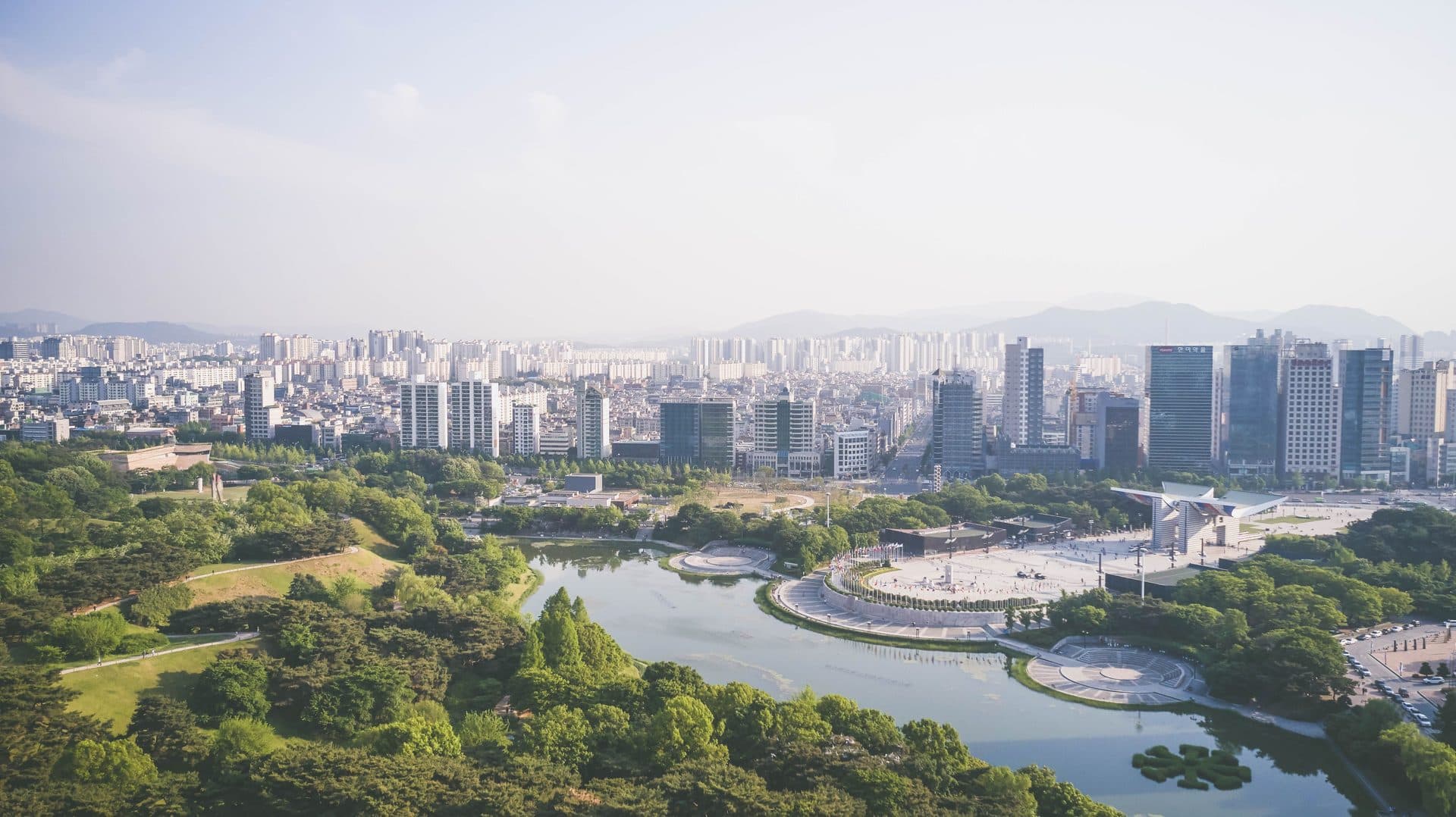
South Korea (Seoul)
South Korea · Asia
The best time to visit South Korea (Seoul) is June, July, August, and September. In summer, daytime highs average 31°C (88°F), with peaks around 35°C (95°F); in winter, nights average -7°C (19°F), dropping to around -14°C (7°F) on the coldest. All climate data are based on historical monthly averages (2005–2025) to help you plan the optimal travel time.
South Korea (Seoul) – What you should know
Seoul has a continental monsoon climate with sharp contrasts: in January daytime highs average 2°C (36°F) and nights -7°C (19°F), with the coldest nights around -14°C (7°F). Winter is dry and often sunny, and snow is normal from December to February. Summer, by contrast, is hot and humid, with daytime highs around 29–30°C (84–86°F) in July and August and around 34–35°C (93–95°F) on the hottest days.
The rainy season (jangma) begins at the end of June and peaks in July: about 475 mm (18.7 in) falls on 12 days, and still around 365 mm (14.4 in) in August, with the sun shining only about 5 hours a day and humidity rising to 75 to 77%. Typhoon remnants occasionally arrive in August and September. The automatically determined best months (June to September) rest on temperatures. For sightseeing, spring and autumn are better.
April at 18°C (64°F) with 87 mm (3.4 in) of rain and the cherry blossom, May at 24°C (75°F), and October at 20°C (68°F) with only 83 mm (3.3 in) of rain and autumn colour peaking from late October to early November are the most pleasant months for palaces such as Gyeongbokgung, the old quarter of Bukchon and the hiking trails on Bukhansan. In spring, yellow dust from Mongolia can occasionally cloud the air. Winter visitors get heated floors, hot broths and empty palace courtyards in return, but need gloves and thermal underwear.
Climate Overview
| Jan | Feb | Mar | Apr | May | Jun | Jul | Aug | Sep | Oct | Nov | Dec | |
|---|---|---|---|---|---|---|---|---|---|---|---|---|
Ø day, range from coolest to warmest dayØ dayrange | 3° (37°)-5– (23–)9 (48) | 6° (43°)-4– (25–)13 (55) | 12° (54°)2– (36–)20 (68) | 18° (64°)10– (50–)27 (81) | 24° (75°)15– (59–)30 (86) | 28° (82°)21– (70–)33 (91) | 30° (86°)24– (75–)33 (91) | 31° (88°)24– (75–)35 (95) | 27° (81°)20– (68–)31 (88) | 21° (70°)12– (54–)27 (81) | 13° (55°)2– (36–)20 (68) | 4° (39°)-6– (21–)12 (54) |
Ø night, range from coldest to warmest nightØ nightrange | -7° (19°)-14– (7–)1 (34) | -4° (25°)-12– (10–)3 (37) | 1° (34°)-6– (21–)7 (45) | 8° (46°)1– (34–)13 (55) | 13° (55°)7– (45–)18 (64) | 19° (66°)13– (55–)23 (73) | 23° (73°)18– (64–)26 (79) | 24° (75°)17– (63–)27 (81) | 18° (64°)12– (54–)22 (72) | 10° (50°)1– (34–)17 (63) | 3° (37°)-6– (21–)11 (52) | -5° (23°)-13– (9–)4 (39) |
☀️Sunshine | 7h UV 5 | 8h UV 6 | 9h UV 7 | 8h UV 7 | 9h UV 8 | 8h UV 8 | 6h UV 6 | 6h UV 6 | 7h UV 6 | 7h UV 6 | 6h UV 5 | 6h UV 4 |
🌧Rain Days | 3d42mm (1.6") | 3d36mm (1.4") | 4d65mm (2.6") | 6d87mm (3.4") | 6d122mm (4.8") | 7d154mm (6.0") | 12d475mm (18.7") | 12d365mm (14.4") | 7d178mm (7.0") | 5d83mm (3.3") | 6d75mm (3.0") | 3d31mm (1.2") |
Best travel timeØ = average · small figures = range: coolest–warmest day / coldest–warmest nightClimate data 2005–2025 · Source: ERA5 + station data
Travel Tips
May offers great weather in South Korea (Seoul) with fewer tourists and lower prices — ideal for those who want to avoid the peak season crowds.
The travel year in South Korea (Seoul)
December – February
Harsh, dry winter: highs only a little above freezing, nights drop to around -7°C (19°F), and the sun often shines in crisp cold. Heated floors, steaming broths and warm hotteok from street stalls make the cold bearable. The palaces lie quiet under snow, and the ski resorts in the surrounding hills are open.
March – May
Spring arrives quickly: March thaws, in April cherry blossom turns the streets and parks pink, and in May it is mild and green. The weather is pleasant, the days are often sunny and the city is full of strollers. Occasionally fine dust from the west clouds the air.
June – August
Hot and humid: from the end of June the jangma rainy season sets in, July brings the most rain and the sun is often hidden behind clouds. Highs sit at 28 to 30°C (82 to 86°F), and well above that on the hottest days. Visitors seek out air-conditioned cafés, museums and night markets.
September – November
The golden autumn: the air is clear and dry, and temperatures ease to a pleasant 20°C (68°F) in October. The leaves turn red and yellow from the end of October, and the mountains to the north of the city are well visited. By November it is already frosty, and the wind makes the streets feel cold.
Events & Festivals
April
- Yeouido Spring Flower Festival· variable (early to mid April, depending on the bloom)
During cherry blossom season the 1.7 km (1 mi) Yunjung-ro around the National Assembly is closed to traffic. Under some 1,800 cherry trees there are street performances, concerts and food stalls.
May
- Lotus Lantern Festival (Yeondeunghoe)· variable (April/May, before Buddha's Birthday)
Around 50,000 participants carry glowing lanterns in an evening parade along Jongno to Jogyesa Temple. The next day brings hands-on activities around the temple and a second lantern procession to close.
December
- Seoul Lantern Festival· variable (winter, between November and January depending on the year, evenings)
Light sculptures made of traditional hanji paper and media art line the Cheonggyecheon stream in the city centre and the Ui stream. Open in the evenings, admission is free.
Frequently Asked Questions
- When is the best time to visit South Korea (Seoul)?
- The best time to visit South Korea (Seoul) is June, July, August, and September. These months offer the most favourable combination of sunshine, temperatures, and low rainfall.
- How warm does it get in South Korea (Seoul)?
- In summer, daytime highs in South Korea (Seoul) average 31°C (88°F), with peaks around 35°C (95°F); in winter, nights average -7°C (19°F), dropping to around -14°C (7°F) on the coldest.
- How much rain does South Korea (Seoul) get?
- South Korea (Seoul) has a relatively even rainfall pattern with an average of 6 rain days per month. The driest months are January, February, and December.
Best Travel Time by Vacation Type
🏙️
City Trip
Pleasantly mild, not too hot
MayJunSep