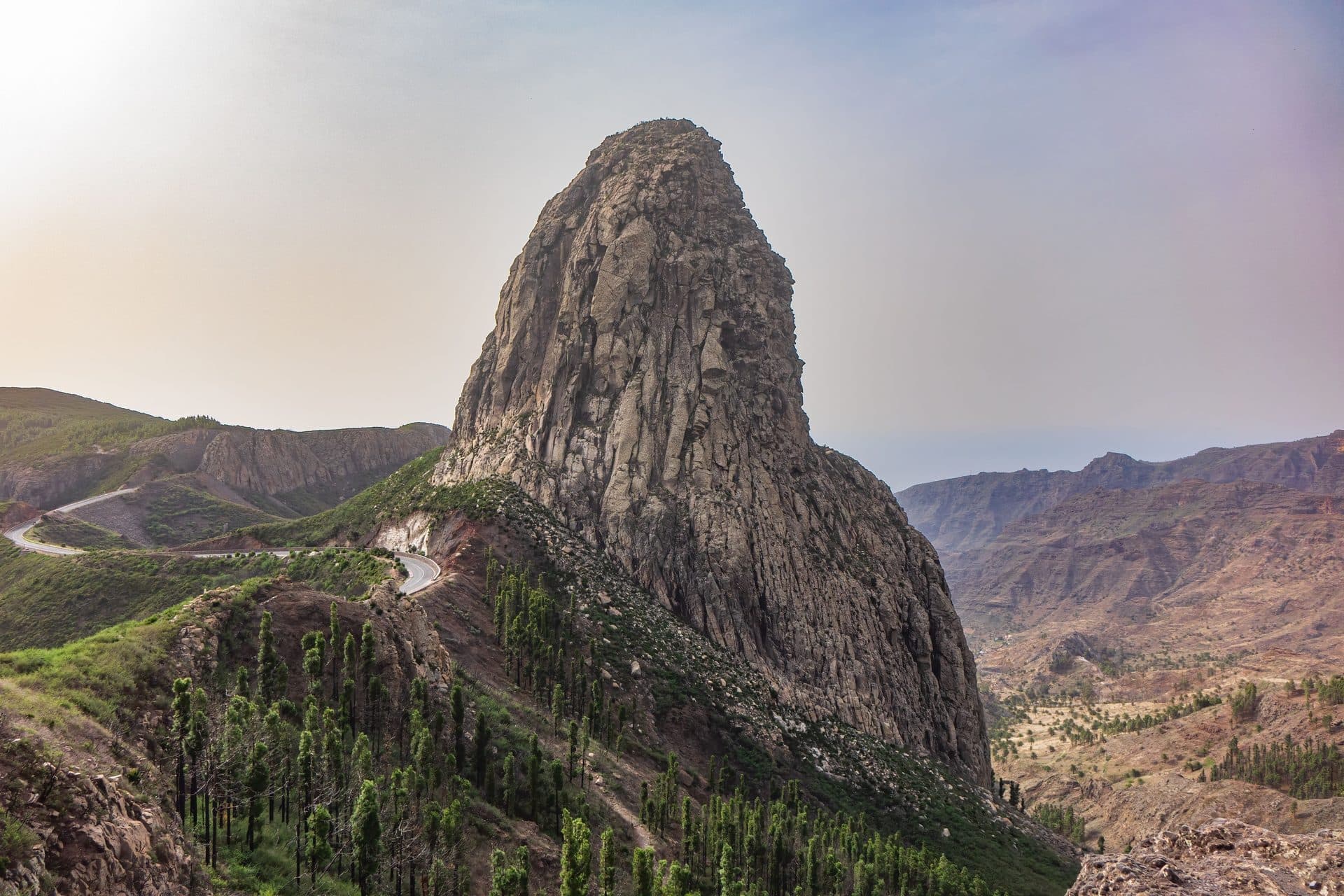
La Gomera
Spain · Europe
The best time to visit La Gomera is June, July, August, September, October, and November. In summer, daytime highs average 28°C (82°F), with peaks around 35°C (95°F); in winter, nights average 15°C (59°F), dropping to around 12°C (54°F) on the coldest. Rainfall is very low during the best travel period (2 mm (0.1 in)), making La Gomera an ideal destination.
La Gomera – What you should know
La Gomera is the hiking island of the Canaries: at its centre lies Garajonay National Park, home to one of the last large laurel forests in Europe, a UNESCO World Heritage Site fed by the trade-wind cloud banks. The coastal villages such as Valle Gran Rey and San Sebastián are small, and beaches are mostly dark and pebbly. Unlike Tenerife there are no hotel towns and only a small airport — most visitors arrive by ferry from Tenerife.
The climate is mild and even: daytime highs of 21°C (70°F) in January and 27°C (81°F) in August, with nights at 15–21°C (59–70°F). The coast is dry, with hardly any rain in June, July and August (under 5 mm (0.2 in)), while the sun shines 7–7.5 hours a day. The Atlantic is warmest in September at 24°C (75°F) and coolest in February at 19°C (66°F). In high summer the hottest days, at 33–35°C (91–95°F), are noticeable in the ravines.
Walkers should favour spring and autumn: April and May bring 22–23°C (72–73°F), October and November 24–26°C (75–79°F), with around 22 mm (0.9 in) of rain. The summit of Garajonay, at roughly 1,480 metres (4,856 ft), sits in cloud and is much cooler, damper and often misty compared with the coast. In winter, December to February with 25–30 mm (1.0–1.2 in) of rain and two to three rain days is no problem, only trails in the north become slippery.
Climate Overview
| Jan | Feb | Mar | Apr | May | Jun | Jul | Aug | Sep | Oct | Nov | Dec | |
|---|---|---|---|---|---|---|---|---|---|---|---|---|
Ø day, range from coolest to warmest dayØ dayrange | 21° (70°)18– (64–)25 (77) | 21° (70°)18– (64–)24 (75) | 22° (72°)18– (64–)27 (81) | 23° (73°)19– (66–)26 (79) | 24° (75°)21– (70–)28 (82) | 25° (77°)22– (72–)29 (84) | 27° (81°)24– (75–)33 (91) | 28° (82°)25– (77–)35 (95) | 27° (81°)24– (75–)30 (86) | 26° (79°)23– (73–)29 (84) | 24° (75°)21– (70–)28 (82) | 22° (72°)19– (66–)25 (77) |
Ø night, range from coldest to warmest nightØ nightrange | 16° (61°)13– (55–)18 (64) | 15° (59°)12– (54–)17 (63) | 16° (61°)13– (55–)18 (64) | 16° (61°)13– (55–)18 (64) | 18° (64°)15– (59–)20 (68) | 19° (66°)16– (61–)21 (70) | 21° (70°)18– (64–)24 (75) | 22° (72°)19– (66–)25 (77) | 21° (70°)18– (64–)23 (73) | 20° (68°)17– (63–)23 (73) | 19° (66°)15– (59–)22 (72) | 17° (63°)14– (57–)20 (68) |
☀️Sunshine | 6h UV 6 | 7h UV 7 | 7h UV 8 | 7h UV 8 | 8h UV 8 | 8h UV 8 | 8h UV 8 | 8h UV 8 | 6h UV 7 | 6h UV 6 | 6h UV 6 | 6h UV 6 |
🌊Water Temp | 20° (68°) | 20° (68°) | 20° (68°) | 20° (68°) | 21° (70°) | 22° (72°) | 23° (73°) | 24° (75°) | 24° (75°) | 24° (75°) | 23° (73°) | 21° (70°) |
🌧Rain Days | 2d25mm (1.0") | 3d30mm (1.2") | 2d19mm (0.8") | 1d9mm (0.3") | 0d2mm (0.1") | 0d2mm (0.1") | 0d0mm (<0.1") | 0d5mm (0.2") | 1d8mm (0.3") | 2d22mm (0.9") | 2d21mm (0.8") | 3d27mm (1.1") |
Best travel timeØ = average · small figures = range: coolest–warmest day / coldest–warmest nightClimate data 2005–2025 · Source: ERA5 + station data
Travel Tips
From April to August, UV levels in La Gomera reach 8 — very high on the WHO scale. High-SPF sunscreen and shade around midday are essential.
May offers great weather in La Gomera with fewer tourists and lower prices — ideal for those who want to avoid the peak season crowds.
The travel year in La Gomera
December – March
In winter La Gomera is mild and quiet: the coast stays dry while clouds often hang in the laurel forest up high. The days are ideal for walking, and the sea, at 19–20°C (66–68°F), is only for the brave. The villages are calm and the innkeepers have time to chat.
April – June
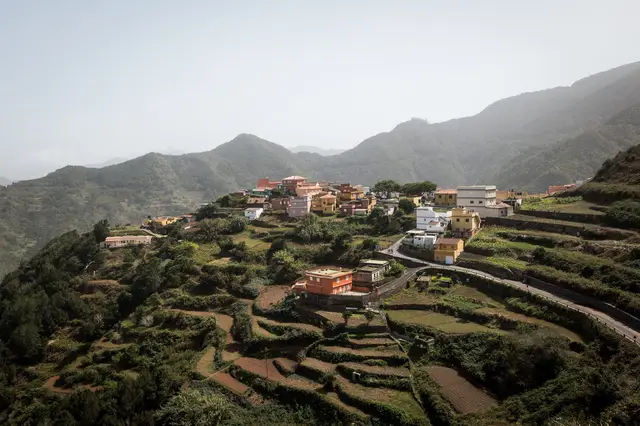
Spring brings flowering slopes and settled weather. The terraced fields in Valle Gran Rey are green, the forest is damp and luminous and the sea slowly warms. It is the season of long hikes before the summer heat arrives.
July – September
Hot, sunny days and the warmest sea temperatures of the year. Walkers start early, because heat builds up in the ravines. In the evening the terraces fill, and in the villages the Silbo Gomero, the island's famous whistled language, is still kept alive.
October – November
Autumn is mild and golden: the trails are in good condition, the sea is still warm enough for swimming and the first showers bring fresh green. The island stays quieter than in summer — a good month for trips into the highlands.
Events & Festivals
January
- Fiesta de Los Reyes· 6 January
Epiphany festival in Valle Gran Rey with the "El Ramo" offering in honour of the Virgen de Los Reyes.
February
- Carnival· variable (February/March)
Carnival with parades in San Sebastián and the island's other towns, much smaller than in Santa Cruz de Tenerife.
September
- Fiestas Colombinas· 6 September
San Sebastián commemorates Columbus, who set out from here in 1492 on his first Atlantic crossing. Around the anniversary, concerts and talks take place across the island throughout September.
October
- Bajada de la Virgen de Guadalupe· every five years in October (most recently 2023, next edition 2028)
The island's patron saint is carried by boat from her chapel in Puntallana to San Sebastián and then around the island. In the years in between, the fiesta is held in Puntallana on the first Monday in October.
Frequently Asked Questions
- When is the best time to visit La Gomera?
- The best time to visit La Gomera is June, July, August, September, October, and November. These months offer the most favourable combination of sunshine, temperatures, and low rainfall.
- How warm does it get in La Gomera?
- In summer, daytime highs in La Gomera average 28°C (82°F), with peaks around 35°C (95°F); in winter, nights average 15°C (59°F), dropping to around 12°C (54°F) on the coldest.
- How much rain does La Gomera get?
- La Gomera has a relatively even rainfall pattern with an average of 1 rain day per month. The driest months are May, June, and July.
- How warm is the water in La Gomera?
- Water temperature in La Gomera ranges from 20°C (68°F) (March) to 24°C (75°F) (September). During the best travel months (June, July, August, September, October, and November), the water is most pleasant for swimming.
Best Travel Time by Vacation Type
🏖️
Beach Holiday
Warm, sunny, little rain
JulAugSep
🏙️
City Trip
Pleasantly mild, not too hot
AprMayJun