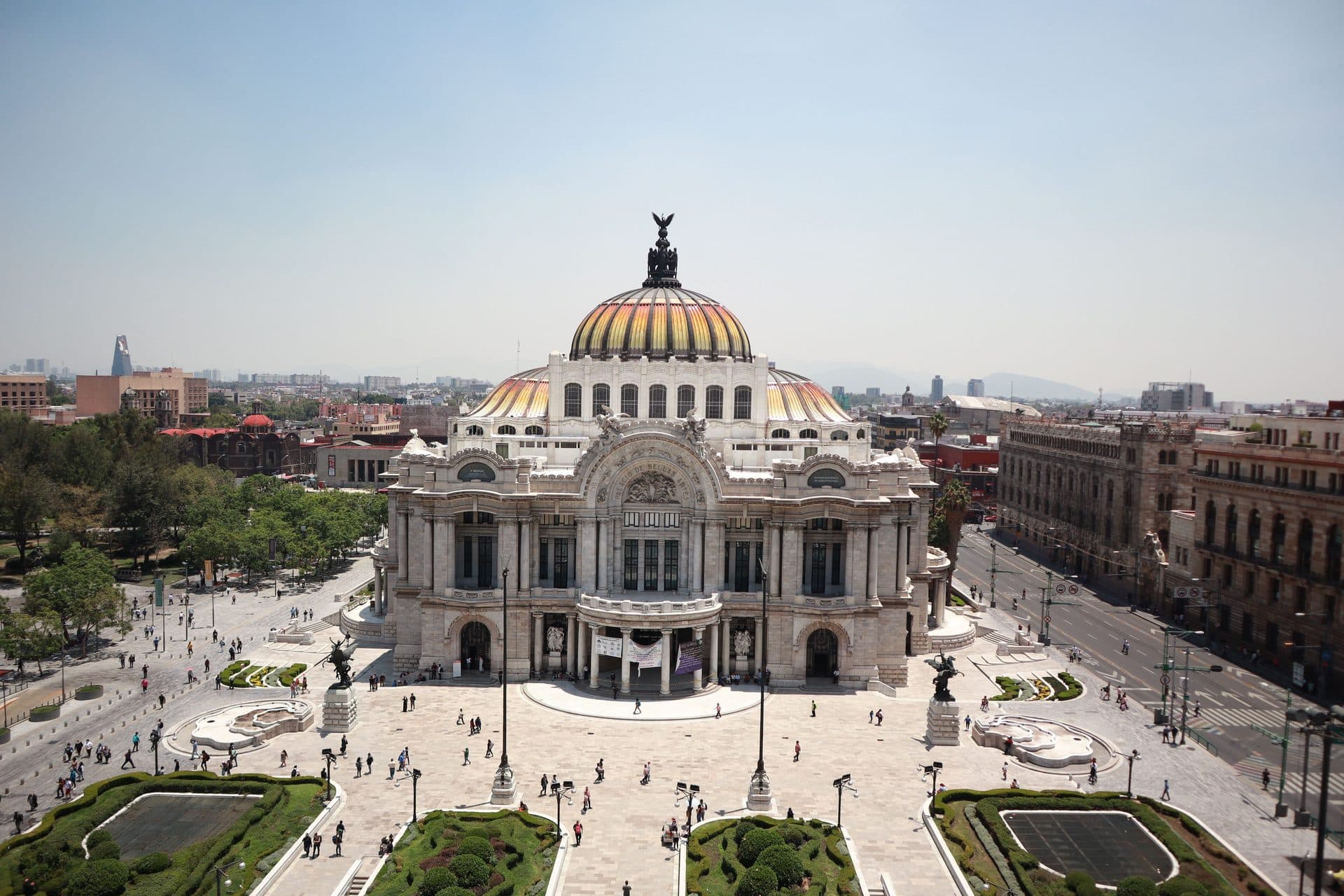
Mexico (Mexico City)
Mexico · North America
The best time to visit Mexico (Mexico City) is February, March, April, May, October, and November. In summer, daytime highs average 29°C (84°F), with peaks around 34°C (93°F); in winter, nights average 4°C (39°F), dropping to around -2°C (28°F) on the coldest. During the best travel months, the sun shines up to 10 hours per day — ideal for sightseeing and outdoor activities.
Mexico (Mexico City) – What you should know
Mexico City sits at around 2,240 metres (7,349 ft) in a high basin, and that shapes the climate more than its latitude does: daytime highs range between 23 and 29°C (73 and 84°F) through the year, while the nights are often fresh. From December to February overnight lows average 3 to 5°C (37 to 41°F), and in the coldest nights drop to about -2°C (28°F). A warm jacket for the evening belongs in every suitcase.
The rainy season runs from June to September, with 160 to 215 mm (6.3 to 8.5 in) a month across 14 to 18 days. Typically the mornings are dry and sunny, and heavy thunderstorms in the afternoon can briefly flood the streets. From February to May it is dry and sunny instead, with 9.5 to 10 hours of sunshine a day and daytime highs around 25 to 28°C (77 to 82°F). In April and May the hottest days can reach a good 34°C (93°F), and the sun is strong (UV index around 9 to 10).
For sightseeing, February to May plus October and November are the best choice: the Zócalo, Templo Mayor, Chapultepec, Coyoacán and the pyramids of Teotihuacán are mostly outdoors. November, with just 28 mm (1.1 in) of rain and a pleasant 24°C (75°F) for daytime highs, also has Día de Muertos on 1 and 2 November, when the city fills noticeably with altars and parades. Anyone coming then should book accommodation and flights early. The altitude troubles many people in the first days, so an easy start and plenty of water help.
Climate Overview
| Jan | Feb | Mar | Apr | May | Jun | Jul | Aug | Sep | Oct | Nov | Dec | |
|---|---|---|---|---|---|---|---|---|---|---|---|---|
Ø day, range from coolest to warmest dayØ dayrange | 24° (75°)16– (61–)29 (84) | 26° (79°)20– (68–)31 (88) | 28° (82°)21– (70–)34 (93) | 29° (84°)22– (72–)34 (93) | 29° (84°)22– (72–)35 (95) | 27° (81°)20– (68–)31 (88) | 25° (77°)20– (68–)29 (84) | 25° (77°)20– (68–)29 (84) | 25° (77°)19– (66–)28 (82) | 25° (77°)18– (64–)28 (82) | 24° (75°)18– (64–)29 (84) | 24° (75°)18– (64–)28 (82) |
Ø night, range from coldest to warmest nightØ nightrange | 4° (39°)-2– (28–)9 (48) | 5° (41°)-1– (30–)10 (50) | 7° (45°)1– (34–)12 (54) | 9° (48°)4– (39–)13 (55) | 11° (52°)5– (41–)14 (57) | 12° (54°)7– (45–)14 (57) | 11° (52°)7– (45–)13 (55) | 12° (54°)7– (45–)14 (57) | 12° (54°)7– (45–)13 (55) | 9° (48°)4– (39–)13 (55) | 6° (43°)1– (34–)11 (52) | 4° (39°)-2– (28–)9 (48) |
☀️Sunshine | 9h UV 8 | 10h UV 9 | 11h UV 10 | 11h UV 10 | 10h UV 9 | 8h UV 9 | 8h UV 9 | 8h UV 9 | 7h UV 8 | 8h UV 8 | 9h UV 8 | 8h UV 7 |
🌧Rain Days | 1d14mm (0.6") | 2d24mm (0.9") | 3d26mm (1.0") | 5d54mm (2.1") | 8d81mm (3.2") | 13d174mm (6.9") | 18d213mm (8.4") | 18d212mm (8.4") | 14d158mm (6.2") | 7d100mm (4.0") | 3d28mm (1.1") | 1d9mm (0.3") |
Best travel timeØ = average · small figures = range: coolest–warmest day / coldest–warmest nightClimate data 2005–2025 · Source: ERA5 + station data
Travel Tips
From January to September, UV levels in Mexico (Mexico City) reach 10 — very high on the WHO scale. High-SPF sunscreen and shade around midday are essential.
January offers great weather in Mexico (Mexico City) with fewer tourists and lower prices — ideal for those who want to avoid the peak season crowds.
The travel year in Mexico (Mexico City)
December – February
Dry air, clear skies and cool mornings: up on the high plateau a sweater is welcome early on, while a T-shirt is enough by midday. The markets fill with winter and Christmas smells, and street stalls sell hot atole and tamales. The city is calm enough for long museum days in Polanco and Coyoacán.
March – May
Jacaranda trees turn whole streets purple, and the terraces of Roma and Condesa stay busy until late. Days are warm and dry with strong sun. Towards May the first thunderheads start to build over the city, a sign that the rainy season is close.
June – September
The city's rhythm follows the sky: sunshine in the morning, a thunderstorm rolling down the streets in the afternoon, and afterwards everything smells of wet stone. The parks are lush green and visitor numbers are lower. Flexible travellers use the dry hours for museums and markets.
October – November
The rains fade, the air clears, and in October the city starts preparing for Día de Muertos: marigolds, sugar skulls and altars fill squares and shop windows. Days are mild and dry, nights noticeably fresher. One of the most atmospheric times to be in the capital.
Events & Festivals
April
- Passion Play of Iztapalapa· varies (Holy Week, March/April)
In the Iztapalapa borough, residents have re-enacted the Way of the Cross since the 19th century, drawing millions of spectators on Good Friday. The performance has been recognised as UNESCO Intangible Cultural Heritage.
September
- Grito de Independencia· 15 September (evening)
On the eve of Independence Day, the head of state delivers the "Grito" from the balcony of the National Palace over a packed Zócalo, followed by a concert and fireworks.
November
- Día de Muertos· 1–2 November
The city fills with altars and marigolds, and a large ofrenda stands on the Zócalo. Around these days a big parade runs from Chapultepec along Paseo de la Reforma to the Zócalo.
December
- Feast of the Virgin of Guadalupe· 12 December
Millions of pilgrims from all over Mexico make their way to the Basílica de Guadalupe in the north of the city, many on foot. Around 11 and 12 December the approach roads are packed.
Frequently Asked Questions
- When is the best time to visit Mexico (Mexico City)?
- The best time to visit Mexico (Mexico City) is February, March, April, May, October, and November. These months offer the most favourable combination of sunshine, temperatures, and low rainfall.
- How warm does it get in Mexico (Mexico City)?
- In summer, daytime highs in Mexico (Mexico City) average 29°C (84°F), with peaks around 34°C (93°F); in winter, nights average 4°C (39°F), dropping to around -2°C (28°F) on the coldest.
- How much rain does Mexico (Mexico City) get?
- Mexico (Mexico City) has a relatively even rainfall pattern with an average of 8 rain days per month. The driest months are January, February, and December.
Best Travel Time by Vacation Type
🏙️
City Trip
Pleasantly mild, not too hot
MarAprMay