Chile (Easter Island)
Chile · South America
The best time to visit Chile (Easter Island) is January, February, March, April, and December. In summer, daytime highs average 27°C (81°F), with peaks around 28°C (82°F); in winter, nights average 16°C (61°F), dropping to around 11°C (52°F) on the coldest. During the best travel months, the sun shines up to 10 hours per day — ideal for beach and outdoor activities.
Chile (Easter Island) – What you should know
Easter Island (Rapa Nui) lies in the south-eastern Pacific, more than 3,500 km (2,175 mi) from the South American mainland, and is reached from Santiago de Chile in roughly five to six hours of flying. The subtropical climate is mild and humid all year: rain falls in every month, mostly between 60 and 120 mm (2.4 and 4.7 in) on five to nine rain days, largely as short showers. There is no longer dry period.
The warmer half of the year runs from December to April: daytime highs average around 25–27°C (77–81°F), nights around 19–21°C (66–70°F), and the sea at 23–25°C (73–77°F) is suitable for swimming. At Anakena beach you can swim well then. Sun and UV are strong (UV index around 9 in January and February), and the sun shines nine to ten hours a day on average. The Tapati festival with its competitions takes place in February, when flights and accommodation are scarce.
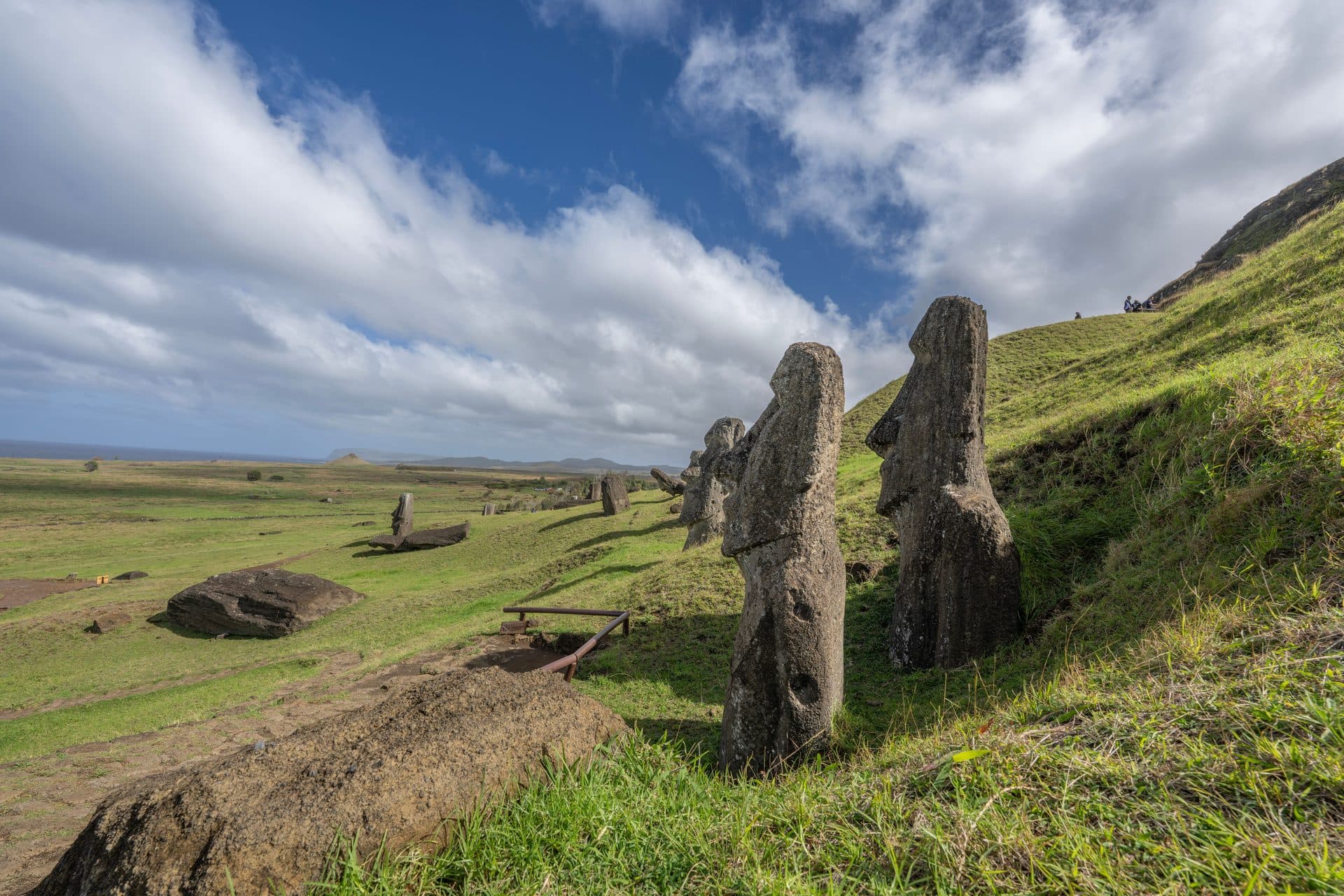
From June to September it is noticeably cooler: daytime highs average around 21°C (70°F), nights around 16°C (61°F), water around 20–22°C (68–72°F), and the sun shines only five to seven hours. The weather is still good enough for the moai at Rano Raraku, the Rano Kau crater and the ceremonial village of Orongo; a rain jacket and layers belong in the luggage at any time. Because the island is small and the programme is built around walks and archaeology, at least three to four days are worthwhile.
Climate Overview
| Jan | Feb | Mar | Apr | May | Jun | Jul | Aug | Sep | Oct | Nov | Dec | |
|---|---|---|---|---|---|---|---|---|---|---|---|---|
Ø day, range from coolest to warmest dayØ dayrange | 27° (81°)24– (75–)27 (81) | 27° (81°)25– (77–)28 (82) | 27° (81°)24– (75–)28 (82) | 26° (79°)22– (72–)27 (81) | 24° (75°)20– (68–)25 (77) | 22° (72°)18– (64–)24 (75) | 21° (70°)18– (64–)23 (73) | 21° (70°)18– (64–)23 (73) | 21° (70°)18– (64–)23 (73) | 22° (72°)19– (66–)24 (75) | 24° (75°)21– (70–)25 (77) | 25° (77°)22– (72–)27 (81) |
Ø night, range from coldest to warmest nightØ nightrange | 21° (70°)17– (63–)23 (73) | 21° (70°)17– (63–)23 (73) | 21° (70°)17– (63–)23 (73) | 20° (68°)15– (59–)23 (73) | 18° (64°)13– (55–)22 (72) | 17° (63°)12– (54–)20 (68) | 16° (61°)11– (52–)19 (66) | 16° (61°)11– (52–)20 (68) | 16° (61°)11– (52–)19 (66) | 17° (63°)12– (54–)20 (68) | 18° (64°)14– (57–)21 (70) | 19° (66°)15– (59–)22 (72) |
☀️Sunshine | 10h UV 9 | 10h UV 9 | 9h UV 8 | 7h UV 7 | 6h UV 6 | 6h UV 5 | 6h UV 5 | 7h UV 6 | 8h UV 7 | 8h UV 9 | 10h UV 9 | 9h UV 9 |
🌊Water Temp | 25° (77°) | 26° (79°) | 26° (79°) | 25° (77°) | 24° (75°) | 22° (72°) | 22° (72°) | 21° (70°) | 21° (70°) | 21° (70°) | 22° (72°) | 23° (73°) |
🌧Rain Days | 8d88mm (3.5") | 4d53mm (2.1") | 8d71mm (2.8") | 7d106mm (4.2") | 9d120mm (4.7") | 9d121mm (4.8") | 7d98mm (3.9") | 7d82mm (3.2") | 7d76mm (3.0") | 6d65mm (2.5") | 7d60mm (2.4") | 5d74mm (2.9") |
Best travel timeØ = average · small figures = range: coolest–warmest day / coldest–warmest nightClimate data 2005–2025 · Source: ERA5 + station data
Travel Tips
From January to December, UV levels in Chile (Easter Island) reach 9 — very high on the WHO scale. High-SPF sunscreen and shade around midday are essential.
November offers great weather in Chile (Easter Island) with fewer tourists and lower prices — ideal for those who want to avoid the peak season crowds.
The travel year in Chile (Easter Island)
December – February
Summer on Rapa Nui: the sea is warm enough for swimming, the beaches of Anakena and Ovahe are busy and the island looks green and alive. In February the Tapati week brings competitions and dances, and the island is at its fullest and liveliest.
March – May
Autumn is calmer: the summer guests have left, the water temperature is still good for swimming and the light is softer. Showers become more frequent but pass quickly. It is pleasantly empty among the moai sites, a good moment for anyone who wants photos without crowds.
June – September
The cool half of the year: the wind freshens, the sea is rough and it is too cool for swimming. The island belongs to walkers and archaeology fans, horses graze freely, and clouds and rainbows give the statues dramatic light. In midwinter a rain jacket is worth packing.
October – November
Spring brings warmth and blossom back: the island greens, the days lengthen and the water slowly warms. Visitor numbers rise but stay moderate. For walking along the rim of Rano Kau and visiting the moai at the quarry it is very pleasant now.
Events & Festivals
February
- Tapati Rapa Nui· varies (around two weeks in late January/early February)
The island's most important cultural festival: two groups compete in traditional contests such as the Haka Pei, where riders race down a steep slope on banana trunks, as well as in singing, dancing and a triathlon. It ends with the crowning of a queen.
Frequently Asked Questions
- When is the best time to visit Chile (Easter Island)?
- The best time to visit Chile (Easter Island) is January, February, March, April, and December. These months offer the most favourable combination of sunshine, temperatures, and low rainfall.
- How warm does it get in Chile (Easter Island)?
- In summer, daytime highs in Chile (Easter Island) average 27°C (81°F), with peaks around 28°C (82°F); in winter, nights average 16°C (61°F), dropping to around 11°C (52°F) on the coldest.
- How much rain does Chile (Easter Island) get?
- Chile (Easter Island) has a relatively even rainfall pattern with an average of 7 rain days per month. The driest months are February, October, and November.
- How warm is the water in Chile (Easter Island)?
- Water temperature in Chile (Easter Island) ranges from 21°C (70°F) (September) to 26°C (79°F) (February). During the best travel months (January, February, March, April, and December), the water is most pleasant for swimming.
Best Travel Time by Vacation Type
🏖️
Beach Holiday
Warm, sunny, little rain
JanFebMar
🏙️
City Trip
Pleasantly mild, not too hot
OctNovDec