Chile (Easter Island) · February
Best travel monthTravel seasonChile · South America
Climate Overview
| Jan | Feb | Mar | Apr | May | Jun | Jul | Aug | Sep | Oct | Nov | Dec | |
|---|---|---|---|---|---|---|---|---|---|---|---|---|
Ø day, range from coolest to warmest dayØ dayrange | 27° (81°)24– (75–)27 (81) | 27° (81°)25– (77–)28 (82) | 27° (81°)24– (75–)28 (82) | 26° (79°)22– (72–)27 (81) | 24° (75°)20– (68–)25 (77) | 22° (72°)18– (64–)24 (75) | 21° (70°)18– (64–)23 (73) | 21° (70°)18– (64–)23 (73) | 21° (70°)18– (64–)23 (73) | 22° (72°)19– (66–)24 (75) | 24° (75°)21– (70–)25 (77) | 25° (77°)22– (72–)27 (81) |
Ø night, range from coldest to warmest nightØ nightrange | 21° (70°)17– (63–)23 (73) | 21° (70°)17– (63–)23 (73) | 21° (70°)17– (63–)23 (73) | 20° (68°)15– (59–)23 (73) | 18° (64°)13– (55–)22 (72) | 17° (63°)12– (54–)20 (68) | 16° (61°)11– (52–)19 (66) | 16° (61°)11– (52–)20 (68) | 16° (61°)11– (52–)19 (66) | 17° (63°)12– (54–)20 (68) | 18° (64°)14– (57–)21 (70) | 19° (66°)15– (59–)22 (72) |
☀️Sunshine | 10h UV 9 | 10h UV 9 | 9h UV 8 | 7h UV 7 | 6h UV 6 | 6h UV 5 | 6h UV 5 | 7h UV 6 | 8h UV 7 | 8h UV 9 | 10h UV 9 | 9h UV 9 |
🌊Water Temp | 25° (77°) | 26° (79°) | 26° (79°) | 25° (77°) | 24° (75°) | 22° (72°) | 22° (72°) | 21° (70°) | 21° (70°) | 21° (70°) | 22° (72°) | 23° (73°) |
🌧Rain Days | 8d88mm (3.5") | 4d53mm (2.1") | 8d71mm (2.8") | 7d106mm (4.2") | 9d120mm (4.7") | 9d121mm (4.8") | 7d98mm (3.9") | 7d82mm (3.2") | 7d76mm (3.0") | 6d65mm (2.5") | 7d60mm (2.4") | 5d74mm (2.9") |
Best travel time current monthØ = average · small figures = range: coolest–warmest day / coldest–warmest nightClimate data 2005–2025 · Source: ERA5 + station data
Travel season — mid-range prices, good availability.
February is one of the best months to visit Chile (Easter Island) — with 10 sunshine hours per day and pleasant highs of 27°C (81°F).
Daytime highs average 27°C (81°F), cooling to 21°C (70°F) at night (daily average: 24°C (75°F)). Peaks reach around 28°C (82°F), the coldest nights around 17°C (63°F). With 10 sunshine hours per day, February is one of the sunniest months — 53 mm (2.1 in) of rain over 4 days. The water is a warm 26°C (79°F) — perfect for snorkelling and swimming.
Pack light summer clothing, sunscreen, and swimwear — beach and water conditions in February are ideal.
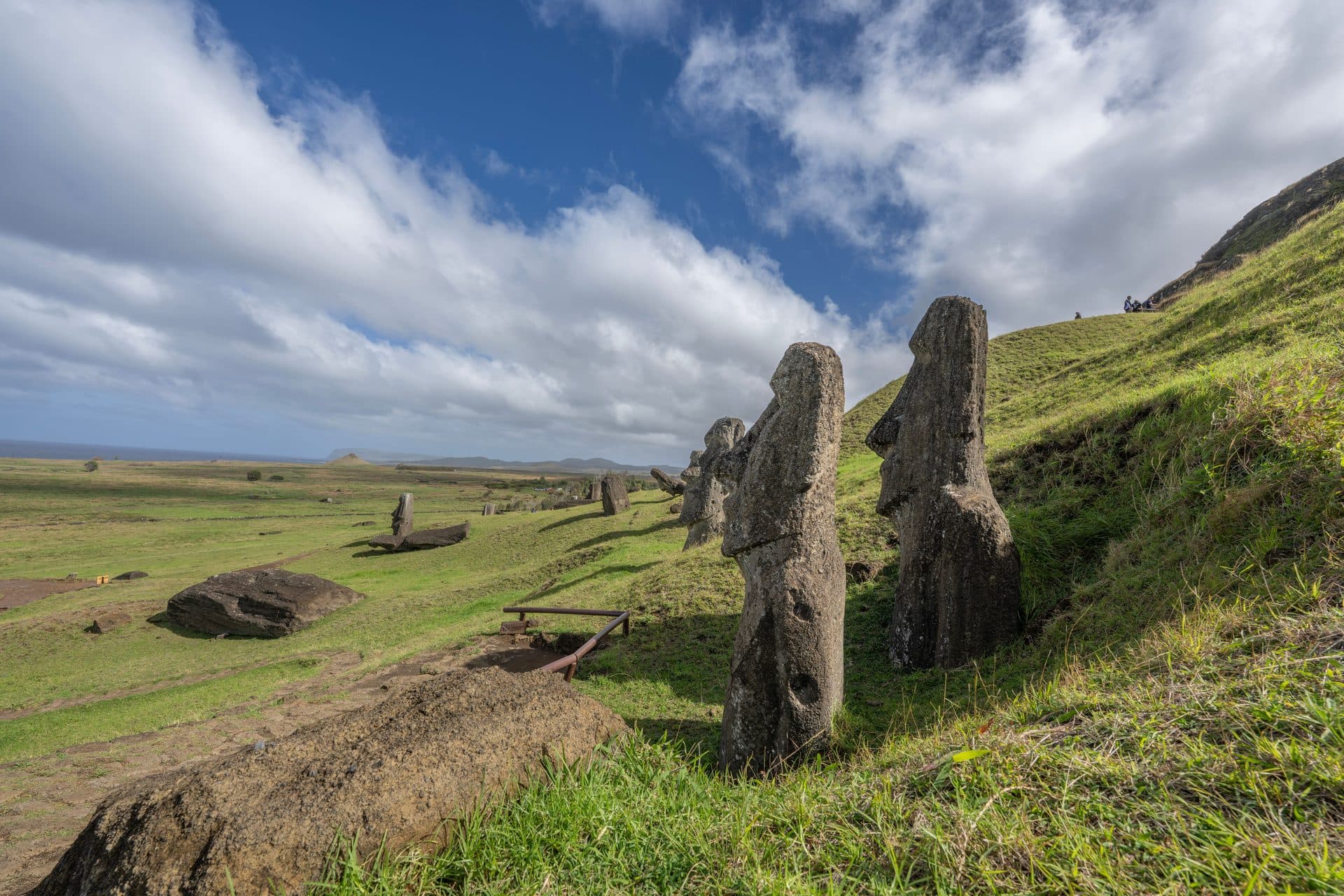
Summer on Rapa Nui: the sea is warm enough for swimming, the beaches of Anakena and Ovahe are busy and the island looks green and alive. In February the Tapati week brings competitions and dances, and the island is at its fullest and liveliest.
Events & Festivals
- Tapati Rapa Nuivaries (around two weeks in late January/early February)
The island's most important cultural festival: two groups compete in traditional contests such as the Haka Pei, where riders race down a steep slope on banana trunks, as well as in singing, dancing and a triathlon. It ends with the crowning of a queen.
Packing list for Chile (Easter Island) in February
- T-shirts and shorts
- Swimwear and beach towel
- SPF 50 sunscreen
- Sunglasses
- Sun hat
- Small umbrella (occasional showers possible)
- Insect repellent
- Travel first-aid kit
Frequently Asked Questions
- Is February a good time to visit Chile (Easter Island)?
- Yes — February is one of the best months to visit Chile (Easter Island) (Climate Score: 86/100). Pleasant temperatures (27°C (81°F)), good sunshine (10 h/day), and few rain days (4) make it one of the most recommended months.
- How warm is it in Chile (Easter Island) in February?
- In February, Chile (Easter Island) sees daily highs of 27°C (81°F). Nights cool to 21°C (70°F), with a daily average of 24°C (75°F). Peaks reach around 28°C (82°F), the coldest nights around 17°C (63°F).
- How much rain falls in Chile (Easter Island) in February?
- In February, Chile (Easter Island) receives an average of 53 mm (2.1 in) of rain over 4 rain days. That is comparatively dry.
- How many sunshine hours does Chile (Easter Island) get in February?
- Chile (Easter Island) averages 10 sunshine hours per day in February — above the annual average.
- How warm is the water in Chile (Easter Island) in February?
- Water temperature in Chile (Easter Island) in February averages 26°C (79°F) — ideal for swimming and snorkelling.